Light Your Home Like a Professional: Easy, Repeatable Setups Lead To Gorgeous Shots
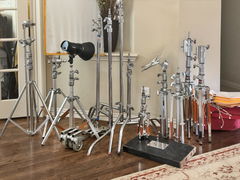
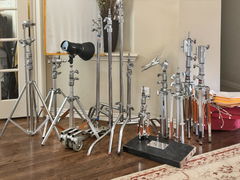
Getting a shot this clean isn't about gear alone - it's about where the light and camera actually sit. This overhead setup lights a knitting project with two points of light: a soft, diffused key light from above and behind, and a front-facing fill light that keeps the hands and stitches clearly visible. The camera hangs on a fully adjustable arm rig, positioned to capture the work without a single stand, leg, or cable in frame. Below is everything used to build it - stands, clamps, diffusion, and grip hardware - so you can recreate the same setup at home.
Studio-Grade Equipment for Content Creators
- Regular price $79.00 USDUnit price
-
- Regular price $119.00 USDUnit price
-
Black Aluminum Lightweight Digital Combo Stand
Regular price $296.00 USDUnit price-
- Regular price $400.00 USDUnit price
-
- Regular priceFrom $53.00 USDUnit price
-
- Regular priceFrom $25.00 USDUnit price
-
40" C+Stand w/Spring Loaded Turtle Base, Includes Grip Head & Arm
Regular price $347.00 USDUnit price-
- Regular priceFrom $91.00 USDUnit price
-
- Regular priceFrom $47.00 USDUnit price
-
- Regular price $47.00 USDUnit price
-
Hollywood Arms 20" - 40" Arm Only
Regular priceFrom $73.00 USDUnit price-
 Regular price $52.00 USDUnit price


Guide to In-Home Setup for Creator Craft Project
Get a beautifully lit overhead shot at home with just a few pieces of grip and lighting gear. This page breaks down a two-point lighting setup for craft, hobby, and hands-on video content, including a diffused overhead key light for soft, even coverage and a front-facing fill light that keeps the work in someone's hands clearly visible. It also covers building a fully adjustable overhead camera rig with a C-stand, grip arm, Gobo plate mount, and Infinity Arm - plus the shot bags counterweight practice that keeps the setup safe and stable. Whether you're filming a knitting project, a woodworking build, a cooking demo, or any other craft content, this collection equips you with the setup, techniques, and gear needed to shoot professional-looking overhead video at home. From soft diffusion for flattering light to safe rigging for extended arms, this guide ensures your setup is ready to shoot.