95% OF ITEMS SHIP FREE IN THE CONTINENTAL USA!

Light Dance Photography and Movement with a Three-Point Studio Setup

Light Dance Photography and Movement with a Three-Point Studio Setup

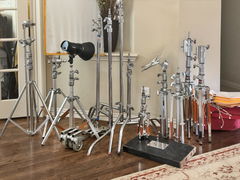
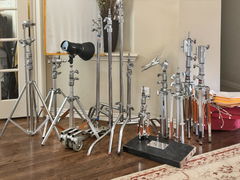
Getting this image is about controlling everything the light touches. This setup lights a dancer on a full cyc with three points of control: a soft overhead key that glows down and slightly behind her from a boomed softbox, a negative fill solid on one side that keeps the wall from bouncing light back into frame, and a full soft fill on the other side, created by three lights on a single stand shining through an 8'x8' overhead silk to give the image body and depth. Every stand is weighted and every wheel is on brake, because a shoot this active means gear has to hold its position and stay off the floor. Below is everything used to set it up - stands, booms, the overhead frame, and the rigging hardware that ties it together - so you can recreate the same three-point setup in your own studio. Tennis balls sold separately at your local retail store.

Featured Collections

Featured Products

Guide to Lighting a Dancer in a Studio or Controlled Environment

Get a professionally lit, full-body dance or movement shot with a three-point setup built around control, not just output. This page breaks down how to combine a soft overhead key with a full soft fill - three lights shining through an 8'x8' overhead silk - and, on the opposite side, a negative fill solid that keeps light from bouncing back off a side wall and flattening the subject. It also covers how to convert a standard combo stand into an overhead stand using a 4.5" Grip Head when you don't have a dedicated overhead stands in your kit, how to counterbalance a boomed light safely, and why roller stands make repositioning a large overhead frame infinitely easier for a shoot with movement. Whether you're shooting dance, fashion, or any subject that moves through the frame, this setup gives you the control to keep the lighting consistent, shot to shot.

What is negative fill, and why use a solid instead of just turning down a light?

Negative fill isn't always about removing light that's aimed at your subject - it can also mean blocking light that would otherwise bounce off a nearby wall or surface and fill in the shadows you're trying to keep. A solid placed just out of frame blocks that stray bounce, holding on to shadow detail and giving the image texture and depth it would otherwise lose.

Why convert a combo stand into an overhead stand instead of just buying a dedicated overhead stand?

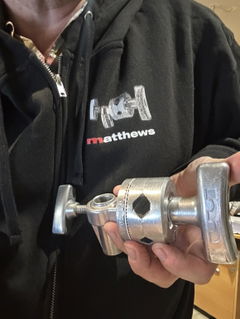
A dedicated overhead stand comes with a 4.5" Grip Head welded directly to the top riser, which is faster to setup and worth having if you use overheads often. But if you have limited space on your truck or in your studio, a combo stand paired with a 4.5" Grip Head will accomplish the same thing - the grip head purchased separately comes with a 1-1/8" Jr Pin that seats easily in a combo caster, saving you precious space.

What's the benefit of roller stands for an overhead frame?

Perhaps the question should be - what's the benefit of wheels? Wheels are a time saver in more ways than one. Heavy fixtures can easily be repositioned with a wheeled stand. In the case of an overhead, using two wheeled stands allows you to reposition the overhead without having to drag your stand across the floor, or lift either the stand or overhead - you can keep the overhead on and slide it in place.

How does a counterbalanced boom keep an overhead key light safe?

Any light extended out on a boom arm creates leverage against the stand its mounted on - the farther out the light sits, the more that leverage wants to tip the stand over. The Junior Boom's built-in counterweight (25lbs) sits on the opposite end of the pivot, canceling out that leverage so the whole assembly balances instead of fighting gravity. It's not optional: an unbalanced boom is one of the most common ways a stand tips on set.

Why shine three lights through one silk instead of using a single larger fixture?

In this case, three smaller lights mounted on the Baby Triple Header and aimed through the 8'x8' silk work well as they spread their output across a large surface. The silk blends the three sources into one continuous soft light. However, there is no reason you cannot use one large beam - it's all dependent on what's in your kit or what you have available to rent at the time.

Is all this rigging really necessary for a small studio or cyc space?

The physics don't change based on room size. A boom light still needs a counterweight, a bagged stand still needs enough weight to ensure safe use, and a silk still needs a stable frame whether it's a rented soundstage or a small in-house cyc. Ultimately, it's about getting the gear that let's you get the shot.

Tennis Balls???

Yes, tennis balls! Many heavy-duty Matthews stands like the combos used here are metal with hard plastic feet to keep elements from getting in your stand risers and rusting from the inside out. On a white cyc, hardwood floor, or any surface that has potential to be scratched or damaged during your shoot, tennis balls are an easy and essential companion to your kit. You can get them anywhere, and they'll protect the floor and keep Locations happy.